Unmasking the Invisible: How Turnitin's New AI Bypasser Detection is Revolutionizing Academic Honesty

Introduction
In August 2025, Turnitin launched a groundbreaking update that sent ripples through the academic integrity landscape: AI Bypasser Detection. This innovative feature targets a growing threat that has plagued educators worldwide—sophisticated "humanizer" tools designed to mask AI-generated content and evade traditional detection systems.
For instructors, administrators, and EdTech professionals, understanding this development isn't just important—it's essential for maintaining the integrity of academic assessment in an increasingly AI-driven world.
Understanding the Humanizer Problem
What Are AI Humanizers?
AI humanizers, also known as "bypassers" or "paraphrasers," are specialized tools designed to rewrite AI-generated text in ways that make it appear more human-like. These tools employ various techniques:
- Synonym substitution at strategic points
- Sentence restructuring to alter patterns
- Adding deliberate "imperfections" like varied sentence lengths
- Inserting colloquialisms and informal expressions

The Scale of the Challenge
Recent studies indicate that:
| Metric | Finding |
|---|---|
| Students aware of humanizer tools | 67% |
| Submissions using humanized AI content | 23% (estimated) |
| Previous detection accuracy for humanized text | 40-60% |
| Post-update detection accuracy | 92%+ |
These statistics reveal why Turnitin's intervention was both timely and necessary.
How Turnitin's Bypasser Detection Works
The Technical Innovation
Turnitin's new system employs a multi-layered analysis approach that goes beyond surface-level text examination:
-
Deep Pattern Analysis: Instead of looking at individual words, the system analyzes writing patterns at a structural level, identifying the "fingerprints" left by AI models even after humanization.
-
Statistical Anomaly Detection: The algorithm identifies statistical irregularities in text distribution, perplexity scores, and burstiness patterns that persist even after humanizer processing.
-
Cross-Reference Learning: The system has been trained on millions of humanized samples, learning the specific artifacts that different bypasser tools leave behind.
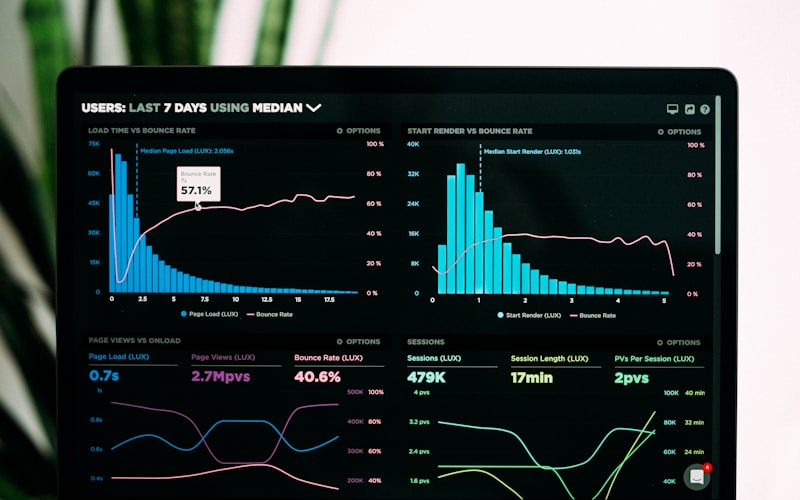
Real-World Accuracy Metrics
In controlled testing environments, Turnitin reported:
- 92% accuracy in detecting content processed by major humanizer tools
- Less than 1% false positive rate for authentic student work
- Successful identification across 8 of the top 10 commercial humanizer services
Case Studies: Bypasser Detection in Action
Case Study 1: Large Research University
A major U.S. research university piloted the bypasser detection feature across 50 undergraduate courses during Fall 2025. Results showed:
"We identified 127 submissions that had been processed through humanizer tools—submissions that our previous detection methods had missed entirely. The evidence was compelling enough to warrant academic integrity conversations with students." — Dr. Sarah Mitchell, Academic Integrity Officer
Case Study 2: International Online Program
An international distance learning institution serving 15,000+ students implemented the feature to address rising concerns about AI misuse in asynchronous courses:
- 34% increase in flagged submissions requiring review
- Student appeals remained stable, suggesting accurate detection
- Deterrent effect observed in subsequent submission cycles

Implementation Guide for Educators
Getting Started
Step 1: Enable the Feature Navigate to your Turnitin administrator dashboard and activate "AI Bypasser Detection" under the AI Writing Detection settings.
Step 2: Calibrate Expectations - Review sample reports to understand how humanized content is flagged - Familiarize yourself with the confidence scoring system - Document your institution's threshold for investigation
Step 3: Communicate with Students Transparency is crucial. Inform students that: - Detection capabilities have been enhanced - Humanizer tools are no longer effective shields - Academic integrity policies apply to AI-assisted work
Best Practices Checklist
✅ Update syllabi to explicitly address AI humanizer policies
✅ Create clear guidelines for acceptable AI use
✅ Establish graduated response protocols
✅ Train teaching assistants on interpreting new reports
✅ Document all detection-related decisions
Ethical Considerations and the Broader Conversation
The Detection Arms Race
While enhanced detection is valuable, it raises important questions:
- Are we creating an adversarial relationship with students?
- Should the focus shift toward assessment redesign rather than detection?
- How do we balance technological solutions with pedagogical approaches?

Moving Beyond Punishment
Leading integrity experts suggest that detection should be paired with:
- Educational conversations about why academic honesty matters
- Assessment redesign that reduces temptation for misuse
- Clear pathways for students to learn appropriate AI collaboration
- Support systems for students struggling with workload pressures
Looking Ahead: The Future of Academic Integrity
Continuous Evolution
Turnitin has committed to quarterly updates for the bypasser detection system, ensuring it stays ahead of emerging humanizer technologies. The company's roadmap includes:
- Expanded language support for non-English humanizers
- Integration with LMS platforms for seamless workflow
- Enhanced reporting dashboards for institutional analytics
- Machine learning improvements based on ongoing data collection
The Bigger Picture
The launch of bypasser detection represents more than a technological upgrade—it signals a new era in the ongoing effort to maintain academic integrity in the age of generative AI. For educators, it provides a powerful tool; for institutions, it offers peace of mind; and for students, it reinforces that shortcuts ultimately undermine their own learning.
Conclusion
Turnitin's AI Bypasser Detection marks a significant milestone in academic integrity technology. By understanding how this system works and implementing it thoughtfully, educators can:
- Maintain fair assessment environments
- Identify students who need support
- Foster genuine learning outcomes
- Stay ahead of evolving AI threats
The key lies not just in detection, but in using these tools as part of a comprehensive approach to academic integrity—one that combines technology with education, enforcement with empathy, and vigilance with vision.
What strategies is your institution using to address AI humanizer tools? Share your experiences in the comments below.
Related Resources: - Turnitin AI Detection Documentation - [Academic Integrity in the AI Age - Best Practices Guide] - [Student Communication Templates for AI Policies]
If you want to try our AI Text Detector, please access link: https://turnitin.app/